Metals, Steel & Pipe Freight Requirements
What a mill, a service center or a pipe yard expects before the truck is loaded, and why each one decides whether the load moves.
Specifications
Metals Freight Requirements at a Glance
What a mill, a service center or a pipe yard expects before the truck is loaded, and why each one decides whether the load moves.
| Requirement | The specification | What it means for the load |
|---|---|---|
| Weight and axle distribution | 80,000 pound interstate gross, 20,000 on a single axle, 34,000 on a tandem group, bridge formula spacing, plus state rules like a kingpin to rear axle limit | Piece weights and positions are assigned before loading, because a concentrated coil in the wrong spot is over on an axle while the gross is legal |
| Coil securement | Metal coils are their own commodity class in the federal securement rules once the coil or group reaches 5,000 pounds | Eye vertical, eye crosswise and eye lengthwise each get a different tiedown arrangement, and the coil sits in a rack, cradle or chocked timbers so it cannot roll |
| Tiedown capacity | Aggregate working load limit of at least half the article weight, with chain on steel and edge protection where a tiedown crosses a corner | Steel edges cut synthetic webbing under tension, while aluminum and coated product take webbing and non-marring dunnage instead |
| Re-securement | Inspection and re-tension inside the first fifty miles, then at set intervals through the trip | Steel beds into the timbers and compresses the dunnage, so chain that was tight at the mill goes slack early in the run |
| Tarping | Steel tarps specified at booking for coil, plate, structural and any coated or surface critical product | Water between the wraps stains a coil permanently and galvanized picks up wet storage stain, so the tarp is product protection, not appearance |
| Documentation | Bill of lading with piece weights and counts, heat numbers and mill test reports kept with the material, certified scale ticket on scrap, country of melt and pour on imported steel | Metal that loses its identity paperwork loses its traceability, and a bundle nobody can trace back to a heat cannot be used on a certified job |
| Length and height | Flatbed decks forty eight or fifty three feet, the thirteen foot six inch height most lanes are built around, rear overhang flagged and marked | Product past deck length moves on a stretch or extendable trailer under permit with the route checked, and tall bundles go to a step deck or an RGN |
| Pipe handling | Thread protectors on both ends, dunnage between rows, bottom row blocked into the stake pockets, chocks or cradle against rolling | The threads are the value in the joint, and a bruised thread is not found at delivery, it is found when the joint will not make up |
| Loading and unloading | Overhead crane or coil lifter at mills and service centers, posted crane hours, site PPE for the driver, and jobsite delivery where there is no dock at all | Arriving after crane hours parks the truck overnight, and a rebar or structural delivery needs the site's lifting equipment confirmed before dispatch |
The equipment
The Trailer Is Chosen by Piece Weight, Shape and Height
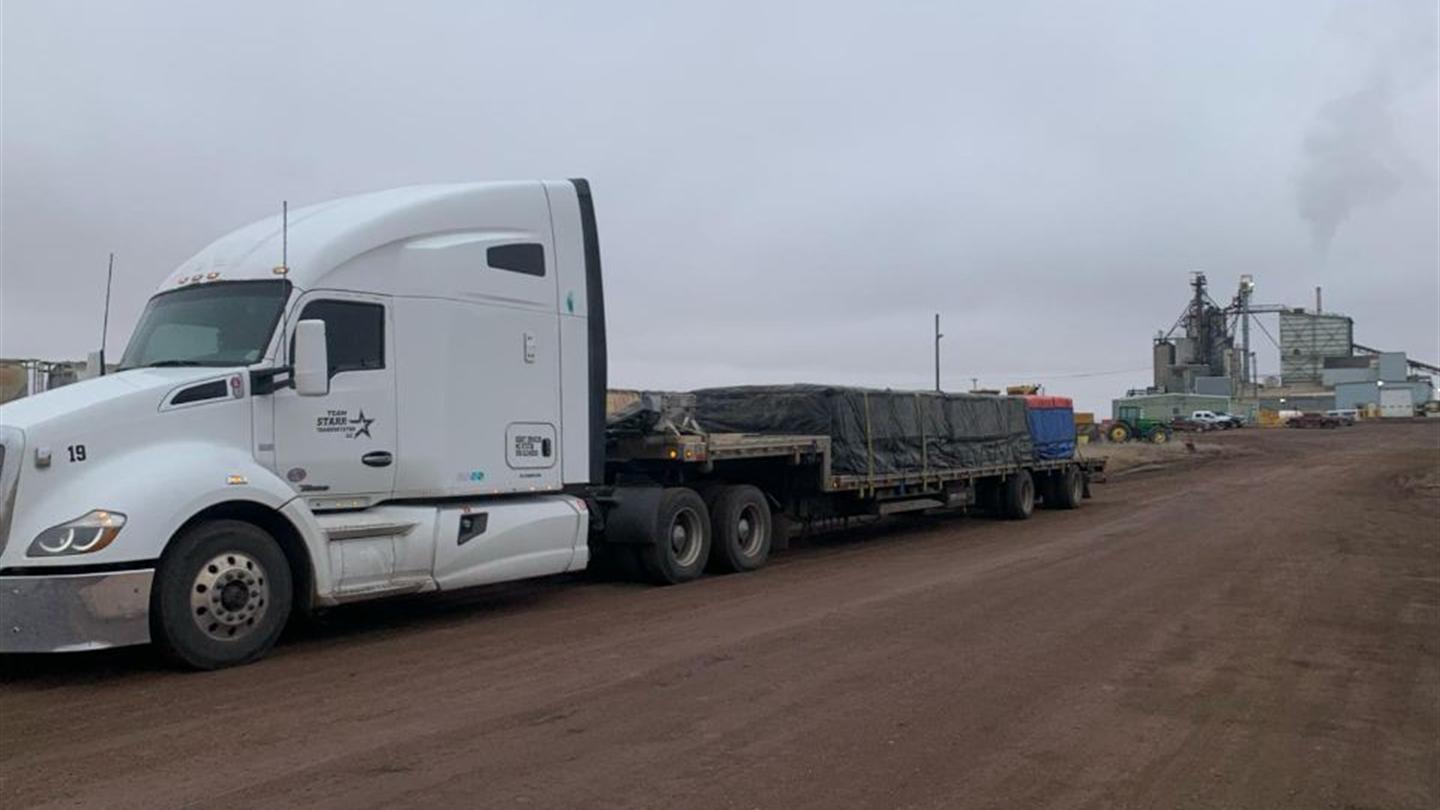
Flatbed is the default for metals and it covers most coil, plate, structural and pipe, but only when it arrives with a coil package: rack or cradle, timbers, chocks, chain and steel tarps. Step deck earns its place on height, dropping the deck so a tall bundle, a coil standing in a rack or a load tarped over a high stack still clears the thirteen foot six inch height most lanes are built around. Stretch and extendable trailers carry joints and beams that run past deck length, under permit and with the route checked ahead of the truck. RGN takes the pieces that have to load off the rear or that no deck height solves. Container and drayage capacity covers import and export steel, where a twenty foot box of coil or pipe hits the road weight limit long before it is full, so the chassis type and the overweight corridor out of the port or the ramp get planned before the box is pulled. And when a piece is genuinely over width or over height it stops being a flatbed conversation and becomes an oversized move, the same way a multi piece fabricated shipment on an erection schedule becomes project cargo. The piece decides the trailer, and the trailer decides everything after it.
Get a Free, No-Obligation Quote Today
A logistics specialist reviews your lanes and comes back with pricing and capacity. Support runs 24/7.
Every carrier is vetted for operating authority and insurance, and we check the certificate before every dispatch, not once a year. USDOT 3411782 · MC 1100274