
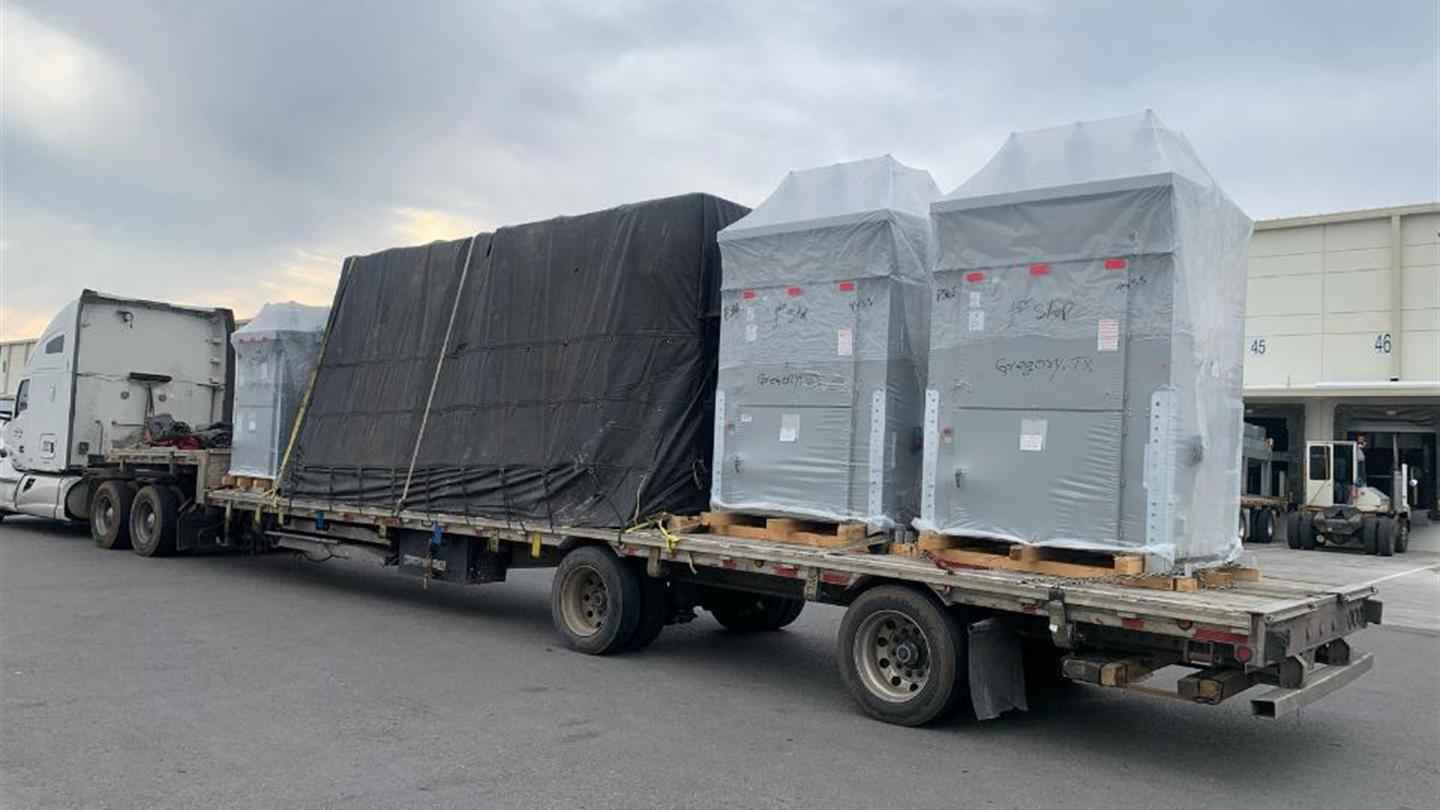
Vehicle, Heavy Equipment and Freight Transport in Texas
Pickups and deliveries anywhere in Texas, from Austin and Dallas to the towns between them, coordinated by one team and hauled by carriers vetted before every dispatch.
Tell us about your shipment in 60 seconds
Your request is in the queue. Our team will text you in under 10 minutes during business hours with your custom quote.
We'll text you at in under 10 minutes during business hours.
Save our number: +1 (888) 354-7402
Every carrier is vetted for operating authority and insurance, and we check the certificate before every dispatch, not once a year. USDOT 3411782 · MC 1100274
At a glance
Shipping in Texas at a glance
The facts that decide how a load moves here. Regulatory figures link to the official page they come from.
- I-10
- I-20
- I-30
- I-35
- I-37
- I-40
- I-45
- I-27
- I-2
- I-69
- I-410
- I-610
- I-635
- I-820
- Port of Houston
- Port of Corpus Christi
- Port of Beaumont
- Port of Port Arthur
- Port of Galveston
- Port Freeport
- Port of Brownsville
- Laredo
- Pharr
- El Paso
- Brownsville
- Eagle Pass
- Del Rio
- Progreso
- Roma
- Rio Grande City
- oil, natural gas and refining
- petrochemicals and chemicals along the Gulf Coast
- cross-border trade and manufacturing with Mexico
- agriculture, including cattle, cotton, grain and produce
- aerospace, defense and technology
- construction and heavy equipment
How freight moves in Texas
Freight in Texas runs on I-10, I-20, I-30, I-35, I-37 and I-40. Ocean and river cargo moves through Port of Houston, Port of Corpus Christi, Port of Beaumont and Port of Port Arthur. Its crossings at Laredo, Pharr, El Paso and Brownsville connect it to Mexico. The state's economy leans on oil, natural gas and refining, petrochemicals and chemicals along the Gulf Coast, cross-border trade and manufacturing with Mexico and agriculture, including cattle, cotton, grain and produce, and that is most of what moves on its roads.
Services
What we move in Texas
Three services, one team, carriers vetted before every dispatch.
Car Shipping
Cars, pickups and SUVs to, from and within Texas, on open or enclosed carriers.
Heavy Equipment Transport
Legal limit 14 ft tall, permits through TxDMV, and the trailer chosen for the machine.
Freight Shipping
Dry van, reefer and flatbed capacity for oil, natural gas and refining and petrochemicals and chemicals along the Gulf Coast and everything else Texas ships.
Cities
Cities we serve in Texas
These are the busiest pickup points. Any address in Texas works, including the towns between them.
AustinTravis County
Austin is the Central Texas stop on I-35, with the TX-130 bypass for through trucks, and its growing technology and manufacturing base drives freight demand.
- I-35
- TX-130
- US-183
- US-290
DallasDallas County
Dallas anchors the inland freight network of the Dallas-Fort Worth region, where I-35E, I-30, I-20 and I-45 connect with intermodal rail terminals and large distribution centers.
- I-35E
- I-30
- I-20
- I-45
El PasoEl Paso County
El Paso sits on I-10 across the Rio Grande from Ciudad Juárez, and its Ysleta and other international bridges handle some of the heaviest truck traffic on the border.
- I-10
- I-110
- US-54
- Loop 375
Fort WorthTarrant County
Fort Worth is a major rail and trucking hub, where I-35W, I-30, I-20 and I-820 serve large distribution and intermodal facilities, especially on the north side of the city.
- I-35W
- I-30
- I-20
- I-820
HoustonHarris County
Houston is home to the Port of Houston and the Houston Ship Channel, one of the busiest ports in the United States by tonnage, and it is a major rail and highway hub.
- I-10
- I-45
- I-69
- I-610
San AntonioBexar County
San Antonio is where I-10, I-35 and I-37 meet, a key stop on the freight corridor between Laredo, the Mexican border and the rest of Texas.
- I-10
- I-35
- I-37
- I-410
BeaumontJefferson County
Beaumont, on I-10 near the Louisiana line, is home to the Port of Beaumont and sits in the Golden Triangle refining and petrochemical region.
- I-10
- US-69
- US-96
- US-287
BrownsvilleCameron County
Brownsville has a deepwater port, the Port of Brownsville, and truck bridges to Matamoros, and it is the southern end of I-69E.
- I-69E
- US-77
- US-83
- TX-48
Corpus ChristiNueces County
Corpus Christi is home to the Port of Corpus Christi, a major gateway for crude oil, natural gas, grain and wind-energy components, at the end of I-37 on the Texas coast.
- I-37
- US-77
- US-181
- TX-358
EdinburgHidalgo County
Edinburg is the Hidalgo County seat, on I-69C north of McAllen, and a convenient staging point for freight bound for the Pharr bridge and the northern Rio Grande Valley.
- I-69C
- US-281
- TX-107
LaredoWebb County
Laredo is the busiest truck crossing on the border with Mexico, with I-35 running north to San Antonio and Dallas and the World Trade Bridge as its main commercial crossing.
- I-35
- I-69W
- US-83
- Loop 20
LubbockLubbock County
Lubbock sits on I-27 and is the main freight center of the South Plains, handling cotton, grain and equipment for the surrounding farm region.
- I-27
- US-62
- US-82
- US-84
McAllenHidalgo County
McAllen is the main commercial center of the Rio Grande Valley, on I-2 and close to the Pharr-Reynosa bridge that handles most cross-border trucks in the area.
- I-2
- I-69C
- US-83
- US-281
MidlandMidland County
Midland sits on I-20 at the center of the Permian Basin, where oilfield equipment, trucks and heavy machinery move in and out throughout the year.
- I-20
- TX-349
- TX-158
MissionHidalgo County
Mission lies on I-2 and US-83 west of McAllen and is known for citrus and agriculture, with produce and farm equipment moving through the western Rio Grande Valley.
- I-2
- US-83
PharrHidalgo County
Pharr is home to the Pharr-Reynosa International Bridge, the main commercial truck crossing in the Rio Grande Valley, with cold storage at the port of entry for produce from Mexico.
- I-2
- I-69C
- US-281
- US-83
Rio Grande CityStarr County
Rio Grande City is the Starr County seat on US-83 and has its own international bridge to Camargo, with truck crossings that serve the upper Rio Grande Valley.
- US-83
Rules of the road
What shapes a move in Texas
- When oversize loads can travel
Texas generally allows permitted oversize loads to move only during the daytime, with night moves for overweight-only loads and for loads up to 10 ft wide and 100 ft long on interstates, and loads over 14 ft wide, 16 ft high or 110 ft long may not move on listed holidays. Source ↗
- Escort vehicles
Texas requires one front escort on two-lane highways or one rear escort on multi-lane highways for loads wider than 14 ft and up to 16 ft, front and rear escorts above 16 ft, and a front escort with a height pole above 17 ft in height. Source ↗
- Seasonal conditions
The Atlantic hurricane season runs from June 1 to November 30, and the Texas Gulf Coast from Brownsville to Beaumont can face storm surge, flooding and port and highway disruptions.
Summer heat above 100 degrees Fahrenheit is common in inland and South Texas from June through September.
Winter storms can bring ice and temporary closures to the Panhandle and North Texas on I-27, I-35 and I-40.
- If you are moving to the state
New residents have 30 days to register a vehicle at their county tax office, and vehicles in 18 emissions counties, including Harris, Dallas, Tarrant, Bexar, Travis and El Paso, need a passing emissions inspection before registration. Source ↗
Rules change. The specialist on your move checks the current ones for your exact route before anything is booked.
Questions about shipping in Texas
Do you pick up and deliver anywhere in Texas?
Yes. Pickups and deliveries anywhere in Texas, including Austin, Dallas, El Paso and Fort Worth, are coordinated with carriers already running those lanes. Rural addresses work too: the carrier confirms access and timing with you before arrival.
Who issues oversize permits in Texas?
The Texas Department of Motor Vehicles, Motor Carrier Division (TxDMV). A load over the legal limits (14 ft (4.27 m) tall, 8 ft 6 in (2.59 m) wide) needs its permit for the exact route, and it is arranged before pickup so the machine does not wait at the yard.
How long do I have to register a car after moving to Texas?
New residents have 30 days to register a vehicle at their county tax office, and vehicles in 18 emissions counties, including Harris, Dallas, Tarrant, Bexar, Travis and El Paso, need a passing emissions inspection before registration. Confirm the details for your case with the state's motor vehicle office before the car arrives.
What slows trucking in Texas during the year?
The Atlantic hurricane season runs from June 1 to November 30, and the Texas Gulf Coast from Brownsville to Beaumont can face storm surge, flooding and port and highway disruptions. Summer heat above 100 degrees Fahrenheit is common in inland and South Texas from June through September. Winter storms can bring ice and temporary closures to the Panhandle and North Texas on I-27, I-35 and I-40.
Can a load from Texas go to Mexico?
Yes. Texas has commercial crossings at Laredo, Pharr, El Paso and Brownsville, and loads bound for Mexico are coordinated through the crossing that fits the route, with customs brokers on both sides.
How fast do you reply to a quote request?
In under 10 minutes during business hours, by text or phone for a move inside the U.S., and on WhatsApp for one going to Mexico.
Across the state line
States next to Texas
Get a Free, No-Obligation Quote Today
Our logistics specialists are standing by. We reply in under 10 minutes.
Every carrier is vetted for operating authority and insurance, and we check the certificate before every dispatch, not once a year. USDOT 3411782 · MC 1100274