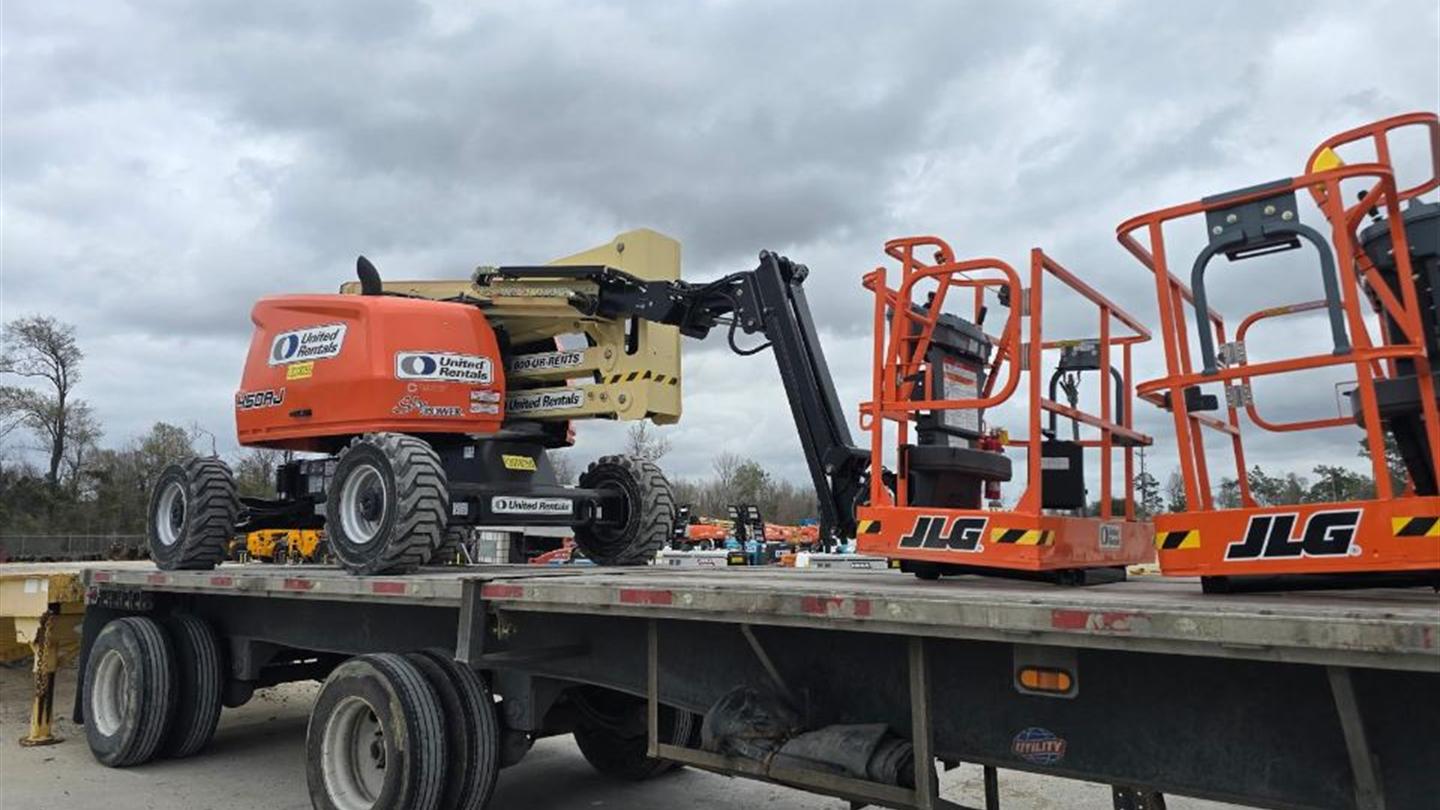
Heavy Equipment Transport in Washington
Excavators, dozers, loaders and tractors moved across Washington on the trailer each machine needs, with the state's oversize permits arranged before pickup.
Tell us about your shipment in 60 seconds
Your request is in the queue. Our team will text you in under 10 minutes during business hours with your custom quote.
Here is what we received. Our team reviews it and replies in under 10 minutes during business hours with your quote.
- PICKUP LOCATION
- DELIVERY LOCATION
- EQUIPMENT TYPE
- MAKE & MODEL
- WEIGHT (LBS)
- DIMENSIONS
- FULL NAME
- PHONE NUMBER
We'll text you at in under 10 minutes during business hours.
Save our number: +1 (888) 354-7402
Every carrier is vetted for operating authority and insurance, and we check the certificate before every dispatch, not once a year. USDOT 3411782 · MC 1100274
At a glance
Shipping in Washington at a glance
The facts that decide how a load moves here. Regulatory figures link to the official page they come from.
- I-5
- I-90
- I-82
- I-405
- I-182
- I-205
- I-705
- Port of Seattle
- Port of Tacoma
- Port of Vancouver USA
- Port of Everett
- Port of Longview
How freight moves in Washington
Freight in Washington runs on I-5, I-90, I-82, I-405, I-182 and I-205. Ocean and river cargo moves through Port of Seattle, Port of Tacoma, Port of Vancouver USA and Port of Everett. The state's economy leans on aerospace and aircraft manufacturing, technology, software and cloud computing, seaports and container trade with Asia and agriculture, including apples, wheat, potatoes and hops, and that is most of what moves on its roads.
Rules of the road
What shapes a move in Washington
- When oversize loads can travel
Washington can restrict permitted loads on major holidays, starting at noon the day before, and during commute hours on listed highway sections, and night movement must be approved on the permit unless the load fits within 12 ft wide, 14 ft 6 in high and 105 ft long. Source ↗
- Escort vehicles
Washington requires pilot/escort vehicles in front and at the rear on two-lane highways for loads wider than 11 ft, a rear escort on multilane highways above 14 ft wide, and a front escort with a height pole above 14 ft 6 in tall. Source ↗
- Seasonal conditions
From November 1 to April 1, vehicles over 10,000 lb must carry tire chains on listed Cascade routes, including I-90 between North Bend and Ellensburg, US-2 over Stevens Pass and US-12 over White Pass, and must chain up wherever 'chains required' signs are posted, with specific chain rules for automobile transporters.
WSDOT and the State Patrol can bar permitted oversize vehicles from chain and traction control areas, and signs such as 'traction advisory, oversized vehicles prohibited' mean those loads must not enter.
Rules change. The specialist on your move checks the current ones for your exact route before anything is booked.
Permits by state
If the route leaves Washington
Every state a load crosses issues its own oversize permit. These are the offices next door, closest first, with their legal limits.
Cities
Heavy Equipment Transport by city in Washington
These are the busiest pickup points. Any address in Washington works, including the towns between them.
SeattleKing County
Seattle shares the Northwest Seaport Alliance with Tacoma, a leading container gateway in the United States, and I-5 and I-90 link its terminals to inland rail and trucking routes.
- I-5
- I-90
- I-405
- SR-99
SpokaneSpokane County
Spokane is the freight center of eastern Washington and the Inland Northwest, on I-90 near the Idaho line, with rail yards and routes to Montana, Canada and the Tri-Cities.
- I-90
- US-2
- US-395
- US-195
TacomaPierce County
Tacoma is home to the Port of Tacoma and its container terminals, part of the Northwest Seaport Alliance with Seattle, with I-5 and SR-167 carrying freight toward the Kent Valley and I-90.
- I-5
- I-705
- SR-16
- SR-167
VancouverClark County
Vancouver sits across the Columbia River from Portland, Oregon, on I-5 and I-205, and the Port of Vancouver USA moves wheat, mineral and liquid bulks, vehicles and project cargo.
- I-5
- I-205
- SR-14
- SR-500
EverettSnohomish County
Everett, on I-5 north of Seattle, is home to the Port of Everett, a major aircraft assembly plant and Naval Station Everett, with US-2 leading east over Stevens Pass.
- I-5
- US-2
- SR-526
- SR-9
KentKing County
Kent is the center of the Kent Valley, a large warehouse and distribution district between Seattle and Tacoma with SR-167, SR-18 and I-5 access.
- SR-167
- SR-18
- SR-516
- I-5
PascoFranklin County
Pasco, in the Tri-Cities near the Columbia and Snake Rivers, is a rail and trucking stop for Columbia Basin potatoes, onions and grain, where US-395 and US-12 meet I-182.
- I-182
- US-395
- US-12
- I-82
YakimaYakima County
Yakima, on I-82 in the Yakima Valley, is a center for apple, hop and tree fruit shipping, with freight routes west over Snoqualmie Pass via I-90 or White Pass via US-12.
- I-82
- US-97
- US-12
- SR-24
Heavy Equipment Transport
Trailers and machines
RGN (removable gooseneck)
The neck detaches so tracked and wheeled machines drive on at deck level.
Lowboy
A deck close to the ground for tall machines that would break the legal height on a flatbed.
Step deck
For loaders, tractors and skid steers that clear the height limit on its lower deck.
Flatbed
For attachments, smaller machines and anything loaded by forklift or crane.
Questions about shipping in Washington
Who issues oversize permits in Washington?
The Washington State Department of Transportation, Commercial Vehicle Services (WSDOT). A load over the legal limits (14 ft (4.27 m) tall, 8 ft 6 in (2.59 m) wide) needs its permit for the exact route, and it is arranged before pickup so the machine does not wait at the yard.
When can an oversize load travel in Washington?
Washington can restrict permitted loads on major holidays, starting at noon the day before, and during commute hours on listed highway sections, and night movement must be approved on the permit unless the load fits within 12 ft wide, 14 ft 6 in high and 105 ft long.
When does Washington require escort vehicles?
Washington requires pilot/escort vehicles in front and at the rear on two-lane highways for loads wider than 11 ft, a rear escort on multilane highways above 14 ft wide, and a front escort with a height pole above 14 ft 6 in tall.
Are there seasonal restrictions in Washington?
From November 1 to April 1, vehicles over 10,000 lb must carry tire chains on listed Cascade routes, including I-90 between North Bend and Ellensburg, US-2 over Stevens Pass and US-12 over White Pass, and must chain up wherever 'chains required' signs are posted, with specific chain rules for automobile transporters. WSDOT and the State Patrol can bar permitted oversize vehicles from chain and traction control areas, and signs such as 'traction advisory, oversized vehicles prohibited' mean those loads must not enter.
Which trailer does my machine need?
The machine decides: its weight, height, width and whether it drives on. Tracked machines usually ride an RGN or a lowboy, loaders and tractors a step deck, attachments a flatbed. With the make, model and dimensions we tell you which before we quote.
How fast do you reply to a quote request?
In under 10 minutes during business hours, by text or phone for a move inside the U.S., and on WhatsApp for one going to Mexico.
Get a Free, No-Obligation Quote Today
Our logistics specialists are standing by. We reply in under 10 minutes.
Every carrier is vetted for operating authority and insurance, and we check the certificate before every dispatch, not once a year. USDOT 3411782 · MC 1100274