
In short
Deck space is almost never the constraint. A load of crushed stone, sand or mineral concentrate hits the legal limit on an axle group with most of the deck still empty, so the conversation is density, axle configuration, load placement and what the certified scale says, not how many pallets fit. And the origin or the destination is usually not an address. It is a pit or a mine at the end of a private haul road, with an inbound scale for tare, an outbound scale for gross, a mandatory site induction, hazard training before a driver steps out of the cab and sometimes an escort across the property. All of that is cycle time, and none of it shows on a map. Material bought per delivered ton is priced out of turns per truck per day, so the minutes at the gate are part of the freight cost.
Weight Out, Not Cube Out: the Load Plan Is an Axle Plan
Crushed stone, sand and gravel run somewhere around a ton and a half per loose cubic yard. A standard five axle tractor and semitrailer nets a payload in the low twenty tons once the tractor and trailer are subtracted from legal gross, which means the truck is full at roughly sixteen or seventeen yards of material. On a 48 foot deck that is a pile that does not come close to the bulkhead. Mineral concentrate is denser still, so a handful of super sacks reaches the limit with most of the deck bare. Nobody in this industry runs out of room. They run out of pounds.
The limits that matter are not one number. On the Interstate system it is 80,000 pounds gross, 20,000 on a single axle and 34,000 on a tandem, and the federal bridge formula ties what a group may carry to how far apart the axles sit. That is why a spread axle trailer legally carries more across two axles than a closed tandem does, why tandems get slid before a truck leaves the yard, and why a bucket dumped at the nose puts the steer axle over while the gross is still legal. A dense load can pass on the total and fail on the group, and the group is what gets weighed.
So load placement is directed at the loader operator, not discussed afterward. There is no shoulder fix for a dense load: you cannot rake concentrate rearward on the side of a highway, and an overweight finding at the first scale house or portable scale becomes a citation against the driver and the carrier and, in a number of states, exposure for whoever loaded it. The practical control is simple and it happens before the wheels turn. The loaded truck crosses a certified scale, the axle split is confirmed, and the ticket that proves it rides with the bill of lading, which the material needs anyway because it is invoiced on net tons.
Where the legal limit is not enough, the route decides the answer. Additional axles, permitted gross above the federal number on state and local roads, and wide variation from one state to the next all change what a lane will actually carry, and an overweight permit arrives with a routing, bridge restrictions and travel time rules attached. That gets settled per lane, because a rate built on a payload the route will not permit is not a rate.
The Gate, the Scale and the Induction: Time That Never Shows on a Map
The route to a pit or a mine ends where the public road does. After that comes a guard shack, a private haul road, an inbound scale for tare weight, an outbound scale for gross, and a scale house that prints the ticket the whole transaction settles on. Traffic on that road follows the site's rules, not the highway's: loaded haul trucks have the right of way and are not going to stop for a tractor trailer, sections run one lane between berms, and some operations will not let a public road tractor cross the pit without a radio channel or an escort vehicle in front of it.
Before a driver steps out of the cab there is training. Surface aggregate operations, sand, gravel and surface stone, run site specific hazard awareness training under 30 CFR Part 46. Underground mines and most other surface metal and nonmetal operations run under Part 48, and the site keeps a record on file for anyone who comes through the gate. Add the induction itself, the PPE the site requires, and at some operations a contractor registration completed days ahead. A driver who arrives without any one of those does not load, and the appointment behind him does not move.
All of it is cycle time, and cycle time is the unit this business is actually priced in. A pit that loads a truck in eight minutes and takes forty at the gate has changed how many turns that truck makes in a day, and turns per day is what a delivered ton costs. So the site's real rules get asked before the first load rather than discovered at the guard shack: training and induction requirements, whether induction can be done online in advance, gate hours against plant hours, the loading window, and whether the trailer coming in is allowed on the haul road at all.
Dust, Moisture and the Tarp Are Product Value, Not Housekeeping
An open load of aggregate loses its fines to the wind and throws stone at whatever is behind it. Federal rules require cargo to be contained so it cannot leak, spill or blow off the vehicle, and most states add their own covering requirement on top of that. A tarp that is not sealed at the leading edge does not stay on: air gets under the front lip, inflates it and takes it off the load at speed. Tarps go on tight at the front, strapped in a pattern that does not saw through at the corners.
For concentrate the tarp is money. A lot settles on assay against dry weight, so every pound that blows off the deck between the mine and the smelter is payable metal nobody gets paid for, and every pound of water picked up on the way is freight paid to haul water the assay then deducts. Wet concentrate also drifts toward the moisture level where it stops behaving like a solid and starts to flow, which is a serious problem when the next leg is a vessel, and a concentrate spill on a public road is an environmental report, not a broom and a shovel.
Lime, cement and treatment material fail in the other direction. Quicklime reacts with water and releases heat, enough to scorch packaging and ruin the pallet around it. Hydrated lime and cement simply set, and a bag that sets is rock nobody can use. Those loads want a dry deck, dunnage under the pallets, a sealed cover and a trailer that was inspected before loading rather than assumed to be clean and watertight.
How Mining Freight Fails in Transit, and What Prevents It
Concentrated weight punches decks. A mill liner set, a crusher mantle or a concave puts five figures of cast steel on a footprint the size of a pallet, and a trailer deck rated in pounds per linear foot fails locally long before the load is illegal on the gross. The fix is cribbing and dunnage that spreads the piece across several crossmembers, placement centered over an axle group instead of wherever the crane could reach, and blocking so the piece cannot walk. A chain over an unblocked casting only records where it used to be.
Bulk bags fail at the seam and at the loops. A super sack lifted from one loop instead of four, dragged across a deck, or set down on an uneven surface tears, and a torn bag of concentrate at highway speed is product on the road and a report to file. Bags ride on pallets or on a swept deck with no protruding nails, in a single tier where the weight already limits the count anyway, strapped over edge protection so the strap does not cut the fabric it is holding.
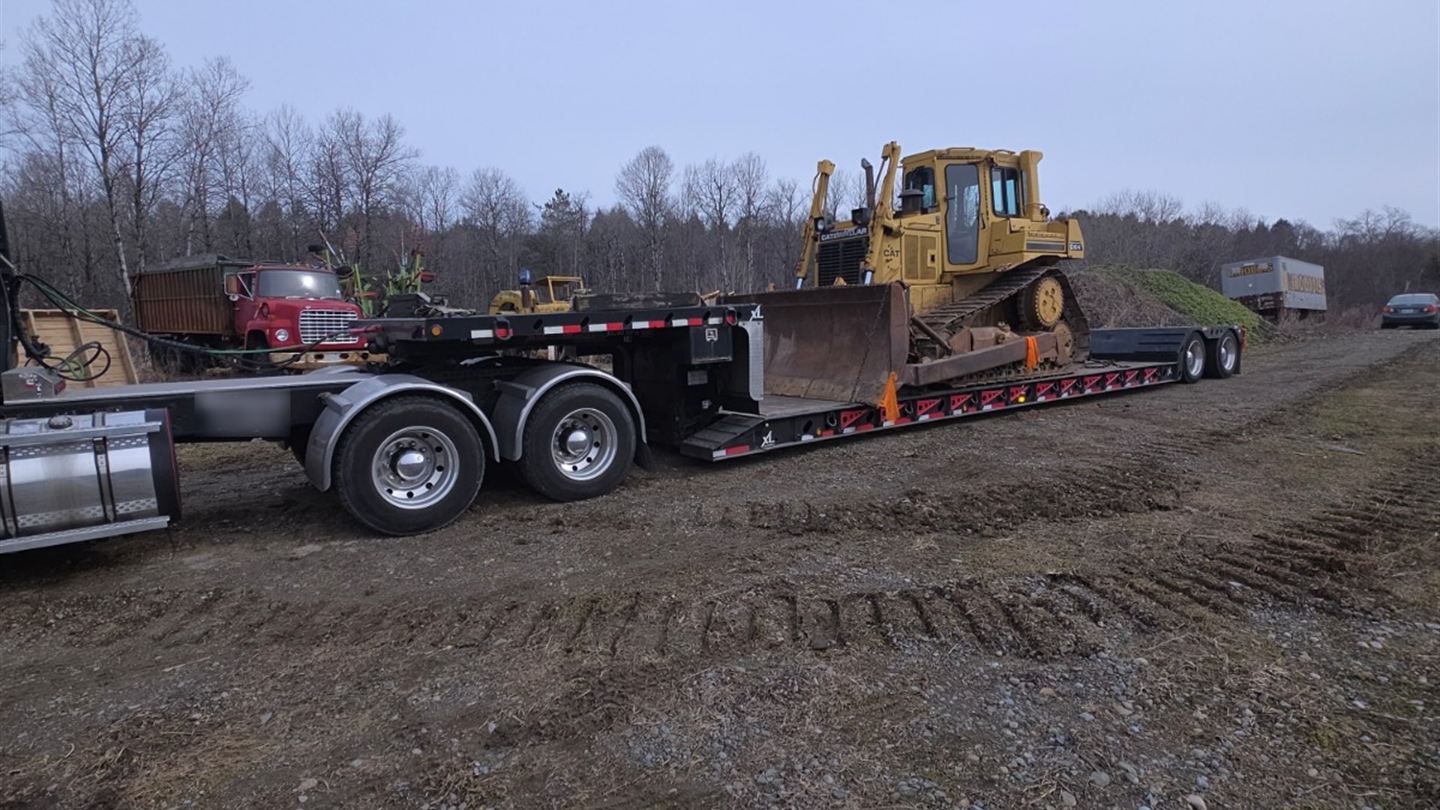
Giant tires do not behave like freight. A haul truck tire on a 63 inch rim is tall enough that standing it up puts the load over legal height, and laying it flat puts it over legal width, so the dimension is a decision, not an accident. It has no flat face to strap against and no way to be stopped once it starts to roll on a deck. It travels cradled or chocked and blocked front and rear, usually on a step deck or an RGN to buy back deck height, and permitted for whichever dimension it actually takes.
Then there is settling. Dense material and heavy single pieces move in the first miles as the load beds in, which is exactly why the federal securement rules require the driver to inspect and adjust within the first 50 miles and again every 150 miles or three hours. The aggregate working load limit of the tiedowns has to total at least half the weight of what they are holding, and on a load this dense the difference between a chain that was tight at the pit and one that is still tight at the scale house is the whole securement.
The Paving Season Peaks and the Mill Never Stops
Aggregate demand is not set by the quarry. It is set by the construction calendar and by public works: paving seasons that close in the cold, agency letting schedules, fiscal year money that has to be spent, and a hot mix plant or a concrete pour that consumes exactly as fast as trucks arrive and stops when they do not. In those weeks every producer in the region is bidding for the same trucks in the same corridor.
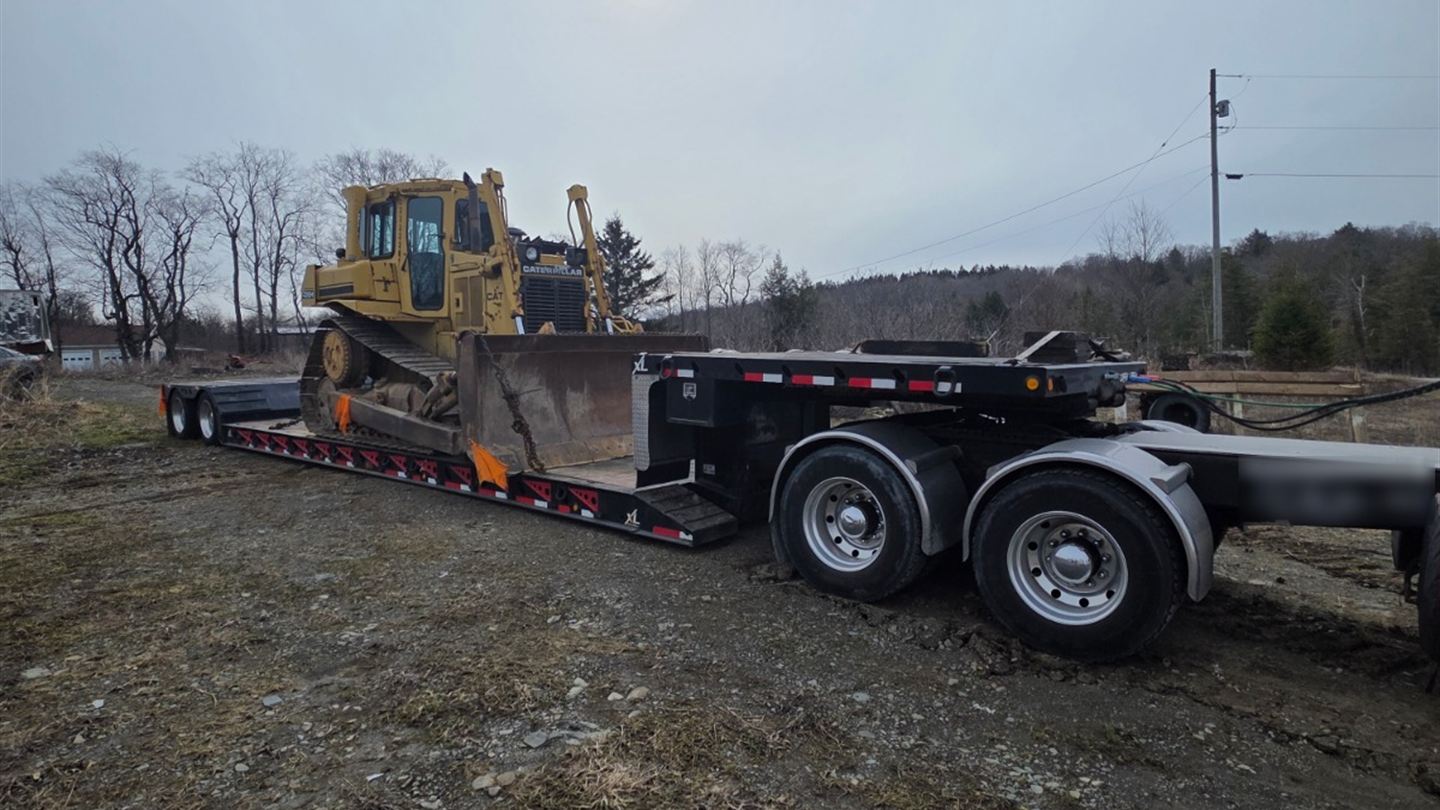
The mine's own clock ignores all of that. A mill runs continuously, concentrate keeps coming off the filter in February at the same rate as in July, grinding media and drill consumables get consumed on a fixed curve, and the one date that genuinely cannot move is a planned shutdown, where liners, wear parts and tires have to be on the ground before crews arrive or the crew stands around at full cost. A shutdown delivery that needs an oversize permit is tighter still, because permitted travel is restricted by time of day and by day of week in much of the country, so a Monday morning start has to be planned backward from the last hours permits will legally run on the Friday before.
So one account usually carries two freight programs at once: a high frequency, weight limited, seasonal flow priced per delivered ton, and a year round inbound and outbound flow where one late truck idles a plant. Handing over both calendars, the paving season and the shutdown schedule, is what puts capacity in front of the weeks where they collide instead of chasing it during them.
Why Dobie Fits a Mine or a Quarry Freight Program
Dobie coordinates transportation: a vetted carrier network managed by dedicated logistics specialists. For this cargo that model has one very specific advantage. The carrier on your load is verified the day it is assigned, not once a year on a file review: operating authority in force, cargo insurance current with limits that correspond to what is on the deck, and equipment that corresponds to the assignment. On mining freight, equipment is not a formality. Whether the trailer has a spread axle or a closed tandem, what its deck is rated at, and what permit it is running under decide whether the load is legal at all. Checking that against this load, on this route, on the day it dispatches, is most of the job.
Behind that sits a nationwide network of vetted carriers across all 50 states, which is what makes it possible to match a trailer to a density instead of to whatever is parked near the pit: flatbed and spread axle for bulk bags and plant steel, step deck and RGN for tires and mill components, dry van for palletized consumables and grinding media, container and drayage for export lots. There is also an internal team here for freight that is not vehicles or machinery, with experience in refrigerated, food and hazardous materials, which is the group that matters when the load is a flotation reagent or an oxidizer rather than rock. The cargo travels covered by the carrier's cargo insurance, with condition documented at pickup and at delivery, which is the record a damaged liner set or a torn bag is argued from. One dedicated specialist per account, 24/7 support and a 98% on time record sit behind the running lanes.
The Rio Grande Valley base matters because mining in this hemisphere is a border business. Mexican mines buy grinding media, drill steel, wear parts and plant components from U.S. suppliers, and concentrate moves north to processors and to port. A lot crossing the border needs its assay and its stated moisture on the paperwork as surely as it needs a commercial invoice, and the schedule has to absorb the customs broker, the yard transfer and the handoff to the carrier on the other side. Crossings, customs brokers, maneuvering yards and Mexican carriers are weekly business for this team in the South Texas corridor, so the border gets planned inside the delivery window instead of discovered inside it.