In short
Energy freight is not one cargo, it is five that share a calendar. A rotor blade is long, flexible and comparatively light, so what stops it is turning radius and overhead clearance, never tonnage: the loaded combination can run past 200 feet while the gross weight stays inside ordinary axle limits. A power transformer is the opposite, a concentrated mass on a short footprint that forces a bridge capacity analysis before a state will issue a permit. Solar modules are glass laminates that arrive by the tens of thousands and crack invisibly from vibration. Grid battery freight is Class 9 hazardous material with its own UN entry, state of charge and packaging rules. All of it is planned backward from one fixed point you do not control: the day the crane is standing on the pad, or the interconnection window the utility handed you.
The Crane Date Sets Everything Upstream
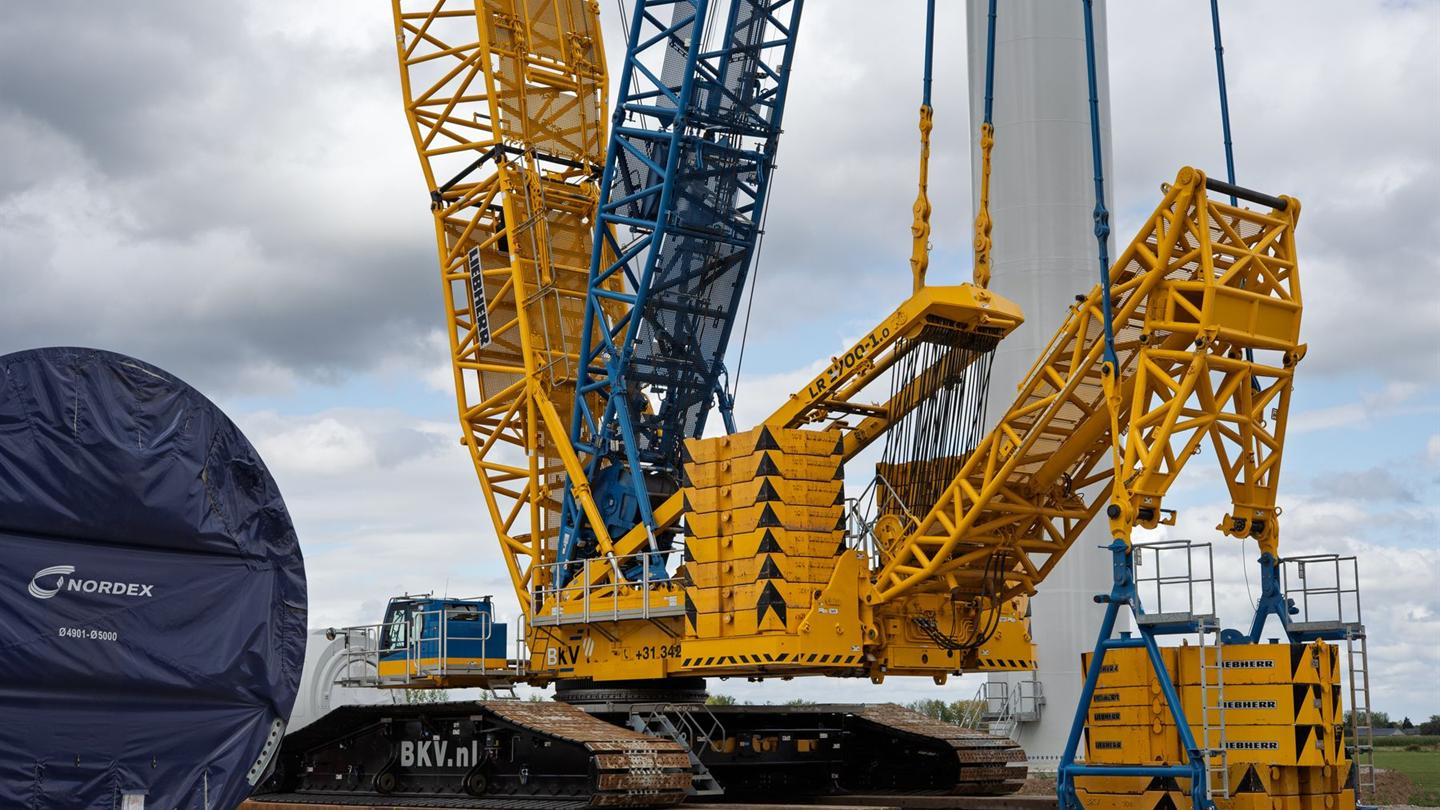
A wind or solar construction schedule is not a list of delivery dates, it is a sequence anchored to equipment that is already on site. A crawler crane large enough to set a nacelle takes days to assemble, bills standby for every day it waits, and walks pad to pad in a planned order. Deliver a tower base after the crane has moved down the row and you are not one day late, you are paying to bring the crane back and rebuild the pick.
The lifts have a weather gate on top of that. Blade and nacelle picks stop when wind at hub height passes the limit written into the lift plan, so a crew often works a window a few hours wide inside a forecast. The component has to be on the pad, offloaded and inspected before that window opens, not rolling toward it.
At the other end of the project sits a date nobody can renegotiate. Energization and interconnection windows are set by the utility, and the qualification deadlines behind the project financing are set in statute. A substation transformer has to arrive, be assembled, be oil filled and processed and pass its acceptance tests weeks before anyone closes a breaker. So the sequence gets built backward: the permitted pieces with the longest permit lead time are scheduled first, the pad critical pieces next, and the high volume commodity freight is released into a laydown yard against the installation calendar.
That is why a delivery on an energy project is measured at the pad, not at the site gate. Components staged in the wrong order in a laydown yard have to be double handled, and double handling a blade or a module pallet is where damage enters the job.
A Blade Is a Clearance Problem, Not a Weight Problem
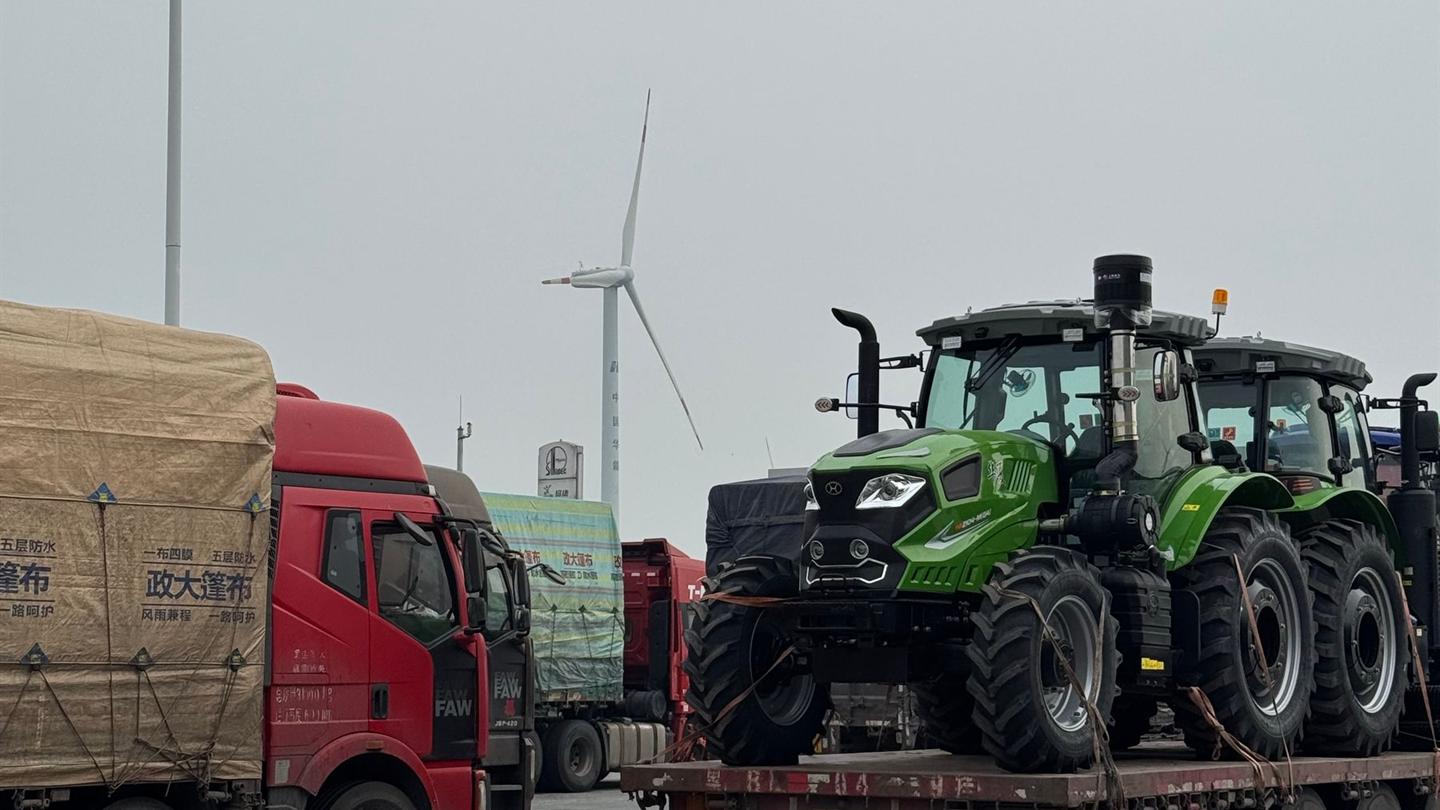
A modern onshore blade is a length problem wearing a heavy haul permit. Utility scale blades commonly run from roughly 150 feet to past 250 feet, and the loaded combination carrying one can exceed 200 feet, yet the weight often stays inside ordinary axle limits. What decides whether that combination reaches the pad is off-tracking: in a turn the rear of the trailer cuts inside the path of the tractor, so intersections, roundabouts, guardrail ends, sign posts, signal masts and curb returns govern the route, along with every overhead line and low branch on it. Tonnage rarely enters the conversation.
The equipment exists to beat those geometries. Blade lifter and adapter trailers rotate the root end so the tip climbs over an obstacle instead of hitting it. Steerable rear dollies put an operator on the back of the trailer to steer the tail through a corner the tractor alone could not pull. Extendable trailers set deck length to the blade rather than to the truck. Which of those can be sourced for your blade length on your dates is a question for the carrier network, not for a web page, so it sits in the confirm list below.
The route survey has to run to the pad, not to the gate. Project access roads are built with engineered radii for exactly this cargo, but they are gravel or caliche, they wash out, and a temporary culvert crossing rated for a concrete truck is not automatically rated for a long multi-axle combination. Escorts, height poles, police assistance, utility line lifts, travel curfews and night only movement windows come from each state's permit conditions and get scheduled with the load, not discovered at the county line.
On the trailer itself, the blade only touches the equipment where the manufacturer says it may. Root fixture and mid-span saddles go at the stations in the transport manual, straps go over designated pads, and nothing crosses the trailing edge. A composite shell carries its strength in the spar cap and the shear web. Clamp it in the wrong place and the damage is a repair scope written by the OEM, on a component whose replacement lead time is measured in months.
A Transformer Is a Bridge Problem
A generator step-up or substation power transformer is the hardest single piece on most energy projects, and the difficulty is concentration. The mass sits on a short footprint, so what a state permit office evaluates is not the gross weight alone but how that weight lands on each span you intend to cross. Above a state's superload thresholds the route gets an engineering review structure by structure, and that analysis is measured in weeks, sometimes longer, with the real possibility that one bridge sends the whole move onto a detour or requires shoring.
Plan the permit first and the truck second. On this cargo the permit, not capacity, is the long pole, and the practical answer is often multi-axle hydraulic platform equipment that spreads the load across enough axles to satisfy the bridge formula, with a rail leg or a port leg carrying the long haul and a short highway move handling the final approach. What can be sourced for your specific weight and route belongs in the confirm list, because promising a dual lane or a self propelled configuration before the survey is how a project schedule gets built on a guess.
The unit also arrives in a defined condition. Large power transformers commonly travel with the oil drained and the tank pressurized with dry air or nitrogen, with the pressure logged at dispatch and at delivery, or oil filled where the design, the weight and the route allow it, while radiators, bushings, conservator and control cabinets ship crated alongside. Three axis impact recorders are fitted for the move, and a recorded shock above the stated threshold can trigger an internal inspection, an untanking or a warranty argument before the unit is ever energized.
That turns ride quality into part of the deliverable. Speed limits written into the permit, braking discipline on grades, how a railroad crossing or a pavement joint is taken, and where the unit is parked overnight all show up on the recorder chart. The move is judged by what the chart says when the seal is broken, not by the arrival time.
How Modules, Batteries and Cable Fail in Transit
A solar module is a glass laminate over brittle silicon cells, and its characteristic failure is invisible at the dock. Vibration and shock open microcracks, the pallet looks perfect, and the loss shows up later as hot spots and underperformance found by electroluminescence testing on a string that will not make its number. That is why modules ship standing on edge in the orientation the manufacturer specifies, with a stated maximum stack height and, on many programs, shock and tilt indicators applied to the pallet. Laying a pallet flat, restacking it at a cross-dock to fill a trailer, or stacking past the rating is how a warranty claim gets denied.
The last two miles do more damage than the highway does. Washboard site roads taken at highway habits put more shock cycles into a pallet in ten minutes than a thousand miles of interstate, so speed on the access road, air ride equipment and forks or a spreader wide enough for the pallet matter more here than anywhere else in the run.
Battery storage is regulated freight before it is heavy freight, and the UN entry sets the file. Loose lithium ion cells and modules ship as UN3480, Class 9. Batteries already installed in a rack, a cabinet or a containerized enclosure ship as UN3481, packed with or contained in equipment. Either entry requires a UN 38.3 test summary available, a state of charge inside the manufacturer's transport instruction, packaging that prevents short circuit and prevents movement inside the package, the required marks, shipping papers carrying the proper shipping name and UN number, and emergency response information with a 24 hour contact number. One detail trips shippers up: in U.S. domestic highway transport a Class 9 placard is not required, and that does not make the load unregulated. Papers, marks, trained hazmat personnel and handling rules all still apply. Damaged or defective cells are a separate regulatory case entirely and are never treated as an ordinary load. The reason the rules read that way is simple: lithium thermal runaway is self sustaining, so the whole control sits in packaging, state of charge and handling, not in response.
Containerized enclosures add a dimensional problem on top of the hazmat problem. A battery enclosure is frequently over legal height once it sits on a standard chassis, it has labeled lift and jack points, and it must never be dragged or skidded into position, so equipment selection is decided by the enclosure drawing rather than by what is cheapest on the lane.
Cable is the quiet one. Medium voltage collection cable rides on wooden or steel reels that belong upright on the flange, chocked and blocked against rolling. Lay a loaded reel on its side to save deck space and the layers crush under their own weight, and a reel of MV cable that fails its acceptance test at the site is scrap, not a repair.
This Is the Sector. Project Cargo and Oversized Loads Are the Modes
Energy is not a trailer type, which is why a single project buys several services at once. Project cargo is the managed campaign: a component list, a route survey, a permit calendar and a sequence of loads that has to land in order. Oversized loads is the individual dimensional piece: one permit, one route, escorts where the dimensions require them. Those two overlap with this page constantly, and the distinction is worth keeping straight when you are buying. Energy and renewables is the sector. Project cargo and oversized are how the pieces actually move, and both have their own page.
Underneath them sit the ordinary modes that carry most of the tonnage. Flatbed hauls tracker steel, pile bundles and cable reels. Step deck picks up the pieces that lose their legal height on a flat deck. RGN and lowboy carry drivetrain components and transformers that are still inside conventional heavy haul range. Container shipping and port drayage handle modules and enclosures that arrive by ocean. Dry van moves inverter cabinets, electrical balance of system, relay panels and spares that only need to stay dry and secure. One project, six modes, one schedule holding them together.
Why Dobie Fits an Energy Project
Dobie coordinates transportation: a vetted carrier network managed by dedicated logistics specialists. On an energy project that model matters in a specific way, because no single fleet owns blade trailers, multi-axle platform equipment, hazmat capable power, port chassis and dry vans at the same time. The component list decides the equipment, and the equipment gets sourced against it piece by piece.
Every carrier assigned to a load is verified the day it is assigned, not once a year on a file review: operating authority in force, cargo insurance current with limits that correspond to that load, and equipment that corresponds to that assignment. On freight where a single component's replacement lead time runs into months, a certificate that lapsed sometime after an annual review is not a paperwork problem, it is a schedule problem. The cargo travels covered by the carrier's cargo insurance with condition documented at pickup and at delivery, which is the record an OEM inspection argument or a tripped impact recorder gets settled from.
Securement follows FMCSA standards, and oversize permits, escorts and route planning are arranged when the load requires them. Behind that sit a nationwide network of vetted carriers, coverage in all 50 states, a 98% on-time record and one dedicated specialist per account with 24/7 support, which on a multi load campaign means one person who knows your erection sequence rather than a new contact for every piece.
The Rio Grande Valley base earns its keep the moment your components are built south of the border. Tower sections, tracker steel, wire harness and electrical equipment for U.S. energy projects are manufactured in Mexico in volume, and the crane date keeps counting through the customs broker, the maneuvering yard and the northbound handoff. Crossings, brokers, yards and Mexican carriers are weekly business for this team in the South Texas corridor, so the border leg is planned inside your window instead of discovered inside it.
There is also an internal team here for freight that is not vehicles or machinery, with experience in refrigerated, food and hazardous materials, which is the side of the job that Class 9 battery freight lives on. What depends on one specific piece of specialized equipment, on dedicated escort coverage in a given state, or on documented prior experience with your exact component family gets confirmed against your list before it is promised. That list is right below, and it is short on purpose.