In short
The receiver. Ranch freight is bought like commodity truckload and delivered like a field job. There is no dock, no forklift, no receiving clerk and often no cell signal, so the load has to arrive on equipment that can get down a dirt lane, turn around in a pasture and put the freight on the ground by itself or in front of a person who brought a tractor. On top of that the buying calendar is set by rain instead of by a sales plan: a dry summer empties the pastures, every operation in the region starts buying hay in the same week, and forage turns into a long haul out of wherever it rained. One category is deliberately off this page. We do not coordinate live animal transport, so everything here is what arrives before the herd and what leaves the place that is not alive.
The delivery address is a gate, not a dock
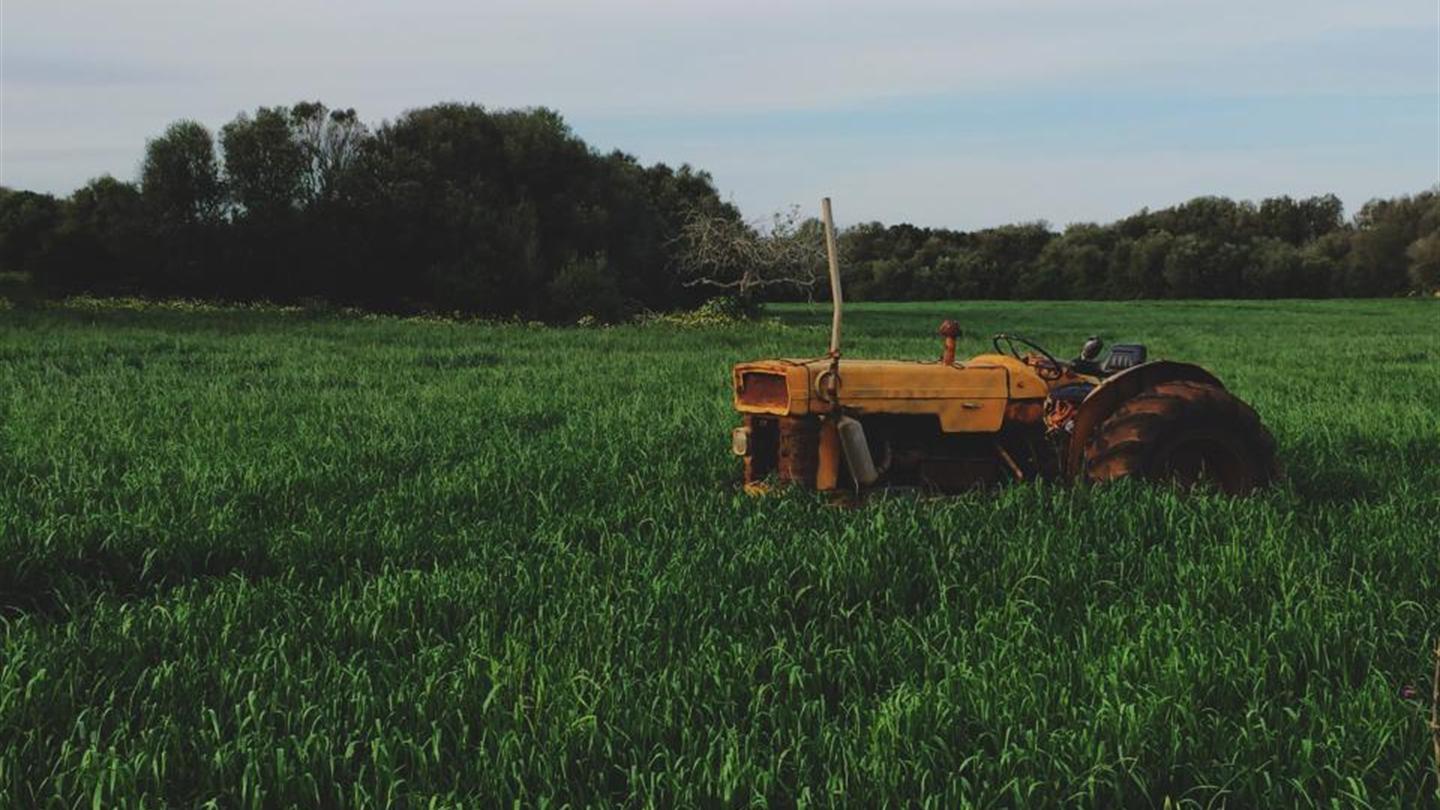
The last three miles decide this load. Ranch entrances are built for a pickup and a gooseneck, not for a tractor trailer, and what stops a truck is rarely the distance. It is a gate opening narrower than the mirrors, a cattle guard nobody has weight-rated since it was welded, a low water crossing that is fine in May and impassable the morning after a storm, mesquite and oak limbs hanging into the lane, and a pasture with no place to turn around. A 53 foot van that gets in and cannot get out becomes a wrecker call on a private road, and that bill has nothing to do with freight.
So the delivery gets planned as a site instead of an address before a truck is ever assigned: gate width, overhead clearance, surface after the last rain, turning room at the pens, and a contact who can talk a driver in when the pin drops in the wrong pasture. Latitude and longitude beat a mailing address on most of these places, because the mailing address is a post office box in town.
Unloading is the other half of that plan and it has exactly three honest answers. Your loader, hay spear or forklift is at the pens at the appointment. The trailer brings its own unload, a truck-mounted forklift riding on the back or a hay trailer set up to roll bales off by itself. Or the freight goes to a staging point everyone agrees on in advance: headquarters instead of the far pasture, the feed store in town, a contractor's yard. Deciding that at the gate instead of at booking turns a delivery into a redelivery, and on a ranch lane a redelivery costs a day.
Forage is booked on moisture, weight and a tarp, and drought sets the lane
Hay is the one commodity here that can damage itself while it rides. Bales put up wet keep respiring in the stack and generate heat in the core, which is why forage is baled into a moisture window instead of whenever the mower gets there, and why that window tightens as the package gets bigger and denser: small squares are commonly baled up toward 18 to 20 percent, large rounds nearer 15 to 18 percent, and big squares tighter still, because they pack the most mass around the least airflow. That number belongs to the producer, not to the driver, but it decides whether a load can be stacked tight and tarped or has to travel with air through it. A carrier cannot fix wet hay and neither can a tarp.
The tarp itself is product protection, not comfort. Rain runs into the outside of a stack, and you pay for it twice: the wet layer molds before it ever gets fed, and the load gains weight between origin and the first scale that nobody quoted. Who furnishes the tarp, who throws and straps it, and who owns it if it comes loose in a crosswind belongs on the rate confirmation, in writing, not in a phone call.
Then the arithmetic. Nobody can price a load of hay from a bale count, because a 4x5 round runs roughly 800 to 1200 pounds depending on species, density and how wet it went up, so the same 36 bale order can scale 15 tons on one cutting and 22 on another. Book on weight and dimension. Legal deck width in general highway service is 8 feet 6 inches, and that is what actually sets how bales are stood or laid and how many rows fit a 48 foot deck. Several states allow wider baled hay loads by specific exemption or permit, but it is a state by state rule and not a national one, so a load that is routine on one side of a state line is a permit conversation on the other.
Ranch freight is seasonal in a way you can predict, which is exactly why a missed week hurts. Winter feeding runs hay, cube and mineral volume from the first cold front until green-up. Spring is fence, water, pens and panels ahead of working season, because nobody wants a crew standing around waiting on material during branding. Late summer is when a dry year quits being a weather story and becomes a freight problem: once the standing forage is gone the herd eats purchased hay every single day, and every operation in the region starts buying in the same week from the same regions that got rain.
That is the moment forage stops being a local commodity. Hay becomes a long haul out of whichever state had moisture, buyers who never shipped a truckload in their lives are suddenly in the market, and capacity on those lanes tightens exactly when your feeding schedule has no slack in it. The number that matters then is not the rate, it is the delivery date somebody will actually commit to. Booked a week ahead into a tightening market, a load gets a truck. Booked for tomorrow into that same market, it gets a quote nobody can hold.
Some ranch freight genuinely cannot wait, and it should be quoted as what it is: fence down on a highway right of way with stock loose, a water system out in August with tanks dropping, a mill that shorted a delivery ahead of a hard freeze. That is what urgent service is for, and keeping it for the real ones is how it stays available when a place actually needs it.
Feed is food, and the trailer's last load is part of the spec
Animal feed falls under the same federal sanitary transportation rule as human food, because that rule was written to cover food for people and food for other animals alike. On a feed load that is not a technicality. The shipper specifies in writing the sanitary conditions the vehicle has to meet, including any cleaning or temperature requirement; where the shipper and the carrier agree the carrier carries that responsibility, the carrier trains its people and keeps the records; and where a bulk vehicle is used, the carrier discloses the most recent prior cargo and the most recent cleaning when the shipper asks. That is the mechanism behind the question every serious feed buyer asks: what was in this box before my load.
It matters because of what else moves in ranch country. A trailer that hauled fertilizer, treated seed, brush control chemical, hides or scrap, then got a dry sweep and reloaded, is a contamination problem you discover in the herd and not at the gate. Medicated feed sharpens it further, because ionophores that are ordinary in a cattle ration are lethal to horses, so a mill that runs both keeps sequencing and flush procedures, and a ration carrying a veterinary feed directive drug moves with an order the buyer and the distributor are both required to keep on file. None of that is the driver's judgment call at the loading spout. It goes on the dispatch before a carrier accepts the freight.
Sacked feed adds a plainer failure. Fifty pound bags on a stretch-wrapped pallet sitting in a box with a pinhole roof, or under a bad tarp on a flatbed, wick moisture and mold from the bottom of the stack upward, and moldy feed gets refused at the gate, as it should be. Clean, dry, sealed box, roof checked before the pallets go in, and pallets built to survive a washboard county road instead of a smooth dock apron. Bulk feed is a different animal again: it needs a bulk trailer that can auger or blow into your bin or commodity barn, and whether that equipment runs on your lane is a question to settle before the mill schedules the batch.
How ranch freight fails in transit, and how it gets prevented
Wire rolls roll. A standard roll of barbed wire is a heavy cylinder in the 80 to 90 pound range, a roll of net wire is far heavier, and rolls stacked on a deck without chocks or a cradle creep with every dip in the road until a strap goes slack and the load starts working. T posts fail the same way with sharper consequences, because banding that lets go turns a bundle into a couple hundred loose steel posts at highway speed. Federal securement math is the floor and not the plan: the working load limits of the tiedowns have to total at least half the weight of the cargo, an article longer than 10 feet takes two tiedowns for the first 10 feet plus one for each additional 10 feet or part of it, and anything round gets blocked, chocked or cradled so it cannot roll before the first strap is ever thrown.
Water tanks fail in the opposite direction. Poly tanks are light and enormous, they cube out a deck long before they weigh anything, they catch wind like a sail, and the strap that holds them is what breaks them. Cinched over a bare edge, a 1000 gallon tank crazes and deforms; run loose, it saws itself against the deck for 600 miles. Tanks ride nested where the shape allows, blocked, padded and strapped at the molded cradle points instead of across the belly. A 10 foot galvanized stock tank is its own conversation, because anything over 8 feet 6 inches wide is an oversize permit, a route and possibly a daylight restriction, not a strap decision.
Salt and mineral fail chemically. Blocks and tubs are hygroscopic, they pull water out of humid Gulf air, and a pallet that sweats fuses into one mass and drips brine that pits a steel deck and ruins whatever sits downhill. Salt and mineral ride sealed, on their own pallets, and never above sacked feed, wire or anything that rusts.
Pipe fails from length. Sucker rod and used drill stem, the fence material of choice across South Texas, arrives in 30 foot and longer joints that will overhang a 48 foot deck if the load plan starts at the headboard without thinking, and rounds nested without stakes or a cradle behave exactly like wire rolls. Length, joint count and overhang are quoting information, not a detail for a driver to discover under a loader at the pipe yard.
What this page does not cover: the live animal and the machinery
We do not coordinate live animal transport, and this page is the place to say it in plain language rather than let a buyer find out on a phone call. Livestock moves on purpose-built equipment, pot trailers and bull racks with the compartments, ventilation and flooring the animal needs, run by people trained in loading density, in what a long stop in July does to a loaded deck, and in the hours of service reality of a load that cannot simply be parked overnight and picked up in the morning.
It also moves on documents that have nothing to do with freight paperwork: brand inspection, a certificate of veterinary inspection, entry requirements that change by state, and, in this part of Texas, the federal cattle fever tick program along the river that puts inspection and treatment obligations on animal movement. Anything crossing into Mexico adds export health protocols on top. That is a specialty, not an add-on service, and the honest answer is to book a livestock hauler who runs those rules every week.
The other line is machinery. If what you need moved is a tractor bought two states away, a loader, a shredder, a baler, a feed truck, an ATV or a UTV, that move belongs on our ranch equipment transport page, which is built around auction pickups, deck space for compact machines and delivery to your gate. The quick test: one used machine bought at a sale or off a listing is the equipment page, and material by the bale, the pallet, the bundle or the bin from a producer, mill, distributor or supply yard is this one.
What stays here is everything that arrives before the herd and everything that leaves the place that is not alive: forage, feed, mineral, fence, pipe, water, pens and the product going out of the barn. Knowing exactly where that line sits is worth more to a ranch buyer than an operator who says yes to every question.
Two different trucks, two different quotes, and it is common to need both in the same month. If your list has a machine on it and 30 tons of hay under it, send both at once and they get planned together instead of separately.
Why this desk fits ranch freight
Dobie Transport is based in the Rio Grande Valley, and the country north and west of here is ranch country: brush pastures, caliche roads, gates a long way from a paved surface, and towns where the feed store is the freight terminal. Rural delivery is not an exception we accommodate, it is the geography the company sits in, and the South Texas crossings that ranch inputs move through are weekly business rather than a line on a coverage map.
Behind that is a nationwide network of verified carriers across the 50 states, and verification happens the day the truck is assigned instead of once a year: active operating authority, insurance with limits that match the load, and equipment that matches the assignment. On ranch freight that last check asks ranch questions. Is a truck-mounted forklift actually on this truck, or was it assumed from the word flatbed. Are the tarps on the truck today, and how many. Is the trailer the bulk unit that can blow into a bin, or a hopper that can only auger. Whatever the equipment cannot answer, the gate will.
Freight other than vehicles and machinery is run by an internal team with refrigerated, food and hazmat experience, which is the right desk for this cargo: feed is animal food under the federal sanitary transportation rule, and brush control chemical and animal health products carry their own handling and documentation rules. You get one dedicated specialist on the account and support around the clock, your load travels covered by the assigned carrier's cargo insurance, and condition is documented at pickup and again at delivery, which on a pasture drop is the only record either of us will have.