
In short
Value density first, and then four failure modes that leave no mark on the outside of a carton. A single pallet of finished devices can be worth more than the rest of the trailer, which makes the parked trailer rather than the moving one the exposure to plan around, and which routinely outruns the cargo limit a dry van carrier buys for ordinary palletized freight. Then the freight breaks in ways nobody sees at the dock. Road vibration fatigues solder joints and works connectors loose. Static damages parts at voltages a person cannot feel. Absorbed moisture inside surface mount components flashes to steam during reflow and delaminates the package. Lithium cells pull part of almost every technology load into Class 9 whether or not the trailer carries a placard. A clean delivery here is not a signature on a sheet, it is gear that powers up.
The Loss Happens in a Yard, Not on the Highway
Electronics have been a top cargo theft target for as long as the industry has tracked it, and the reason is resale velocity. A pallet of laptops, phones or graphics cards clears a secondary market in days at close to street value, and no buyer downstream checks a serial number. Steel has to be sold by weight to somebody with a furnace, and packaged food has to move at volume before it dates out, so both need a buyer lined up before the theft is worth the risk. Devices do not. That difference moves the danger off the highway and into the parking lot. The exposure is the loaded trailer standing still: an overnight at a truck stop near a distribution hub, an unfenced drop lot, a Friday afternoon appointment at a receiver that stops unloading at three and becomes a Monday morning unload with the freight sitting loaded the whole weekend.
The second pattern costs more and looks like nothing on camera. Strategic theft does not cut a lock, it takes possession legally at the dock. Somebody presents as a carrier using a real motor carrier's identity, or the load is re brokered down a chain until the truck at the door belongs to nobody in the file, and the freight leaves through the front gate with a signature on the paperwork. Electronics attract that work because the payoff justifies the setup. The defense is not a better seal, it is knowing who is under the trailer before it loads, which is why the carrier on a technology load is verified the day it is assigned instead of pulled off a load board and trusted.
So the plan answers questions ordinary freight never asks. Where does the truck stop in the first stretch out of the shipper, while the load is still inside the radius that gets watched, the working rule in this cargo being no unsecured stop in the first 200 to 250 miles, because that is where surveillance from a pickup gives up. Is the trailer ever left unattended, and if so, in whose yard and behind what fence. Does the value justify a team so it never parks at all. Even the appointment is a security decision, because booking a trailer of devices into the last slot before a weekend is booking it to sit for sixty hours with everything of value already loaded.
Standard Cargo Limits Were Not Written for a Trailer of Devices
This is the part technology shippers discover after a claim instead of before one. A dry van carrier buys cargo insurance sized for the freight that fills most dry vans, and the whole market is priced on that assumption. One trailer of finished devices, or a handful of pallets of populated server gear, can carry more value than that policy was ever meant to absorb, and the gap is not a rounding error, it is an order of magnitude. Nothing in a rate confirmation tells you so. The certificate says there is cargo coverage, and there is, up to a limit that stops long before your load does.
The exclusions matter as much as the limit. Cargo policies commonly carve out theft from an unattended vehicle, restrict named high value commodities such as consumer electronics and semiconductors, or require specific security conditions before a theft claim is payable at all, so a load taken out of a truck stop can be technically insured and practically uncovered. There is no good way to learn that late.
So the value goes on the table before dispatch instead of onto the bill of lading afterward. Give us the declared value of the trailer rather than a freight class, and the coverage question gets answered as part of the assignment: what the carrier being assigned actually carries, whether its certificate holds an exclusion that touches your commodity, and whether this load sits above that limit. Excess and shipper's interest coverage exist for exactly this cargo. What a specific placement covers, what it costs and who writes it depends on your commodity and your lane, so it gets settled with your specialist rather than promised on a page, and it sits in the list below of what we confirm with you directly.
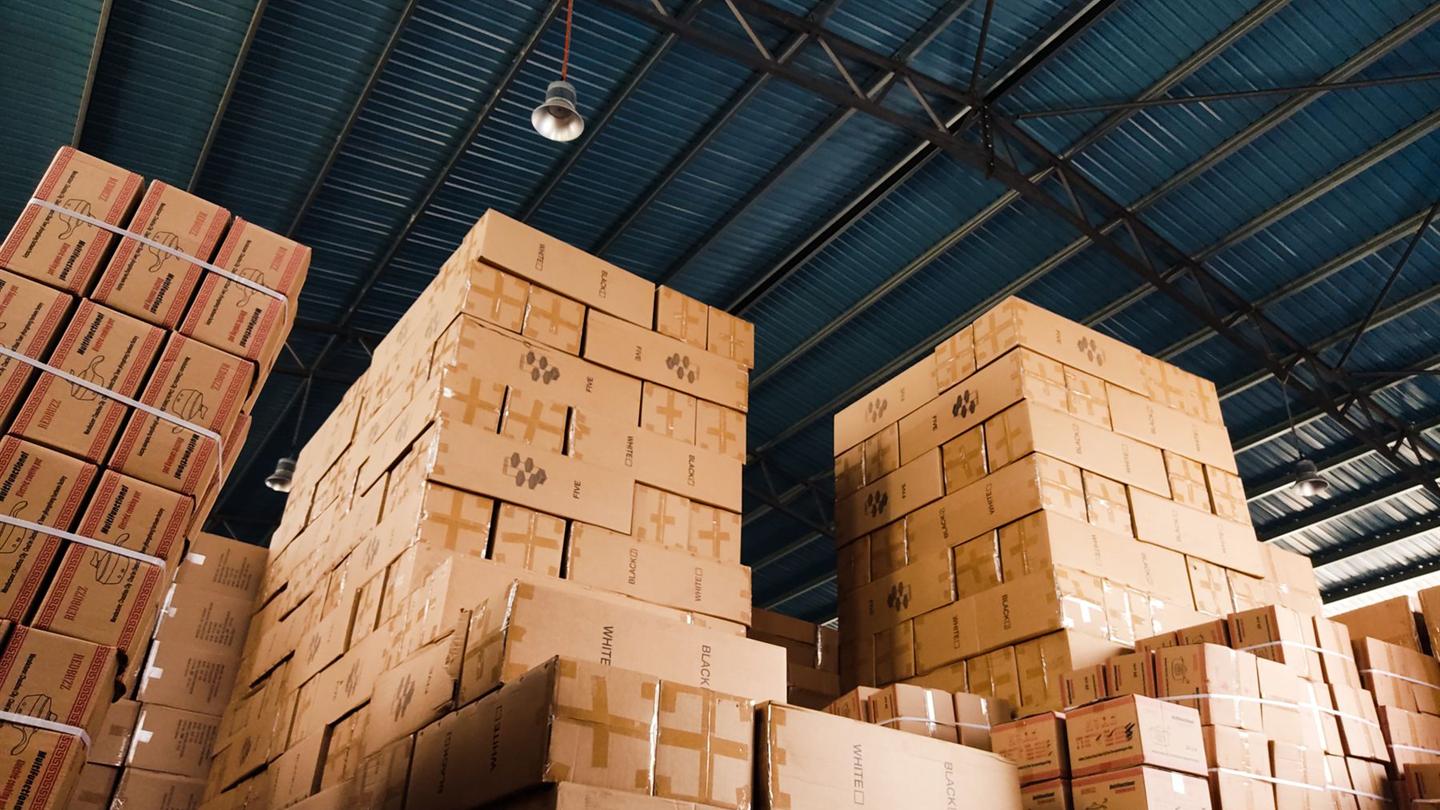
Vibration, Static and Humidity Break Gear Nobody Dropped
Technology freight has a failure mode no dock inspection catches: it arrives looking perfect and then does not power up. Road vibration is not an event, it is hours of continuous low frequency input, and it works connectors loose in their sockets, fatigues solder joints under heavy components and stresses spinning drives in a way no drop test simulates. Air ride suspension removes a large share of that and placement removes more, because the ride is roughest over the trailer tandems and at the rear doors, so shock sensitive crates ride forward of the axles with the void blocked and braced to FMCSA securement standards so nothing walks. Glass gets its own rule: display panels are strong in compression and weak in bending, so they travel upright on edge in A frame racks with nothing loaded on top of them.
Electrostatic discharge is the failure with no evidence at all. A person does not feel a static discharge until it reaches a few thousand volts. Human body model Class 0 devices are damaged below 250 volts and the most sensitive parts below 100, so a handler can wound a board without noticing anything happened, and the part often does not die outright, it degrades and fails weeks into service. The ESD packaging is the protection and it only works closed. A shielding bag opened at a cross dock so somebody can verify a piece count, or a board rewrapped in ordinary stretch film, is the whole scheme defeated by a helpful dock worker.
Moisture works the same way in slow motion. Surface mount components carry a moisture sensitivity level and ship in a barrier bag with desiccant and a humidity indicator card, because absorbed moisture flashes to steam during reflow soldering and delaminates the package from the inside, the defect the industry calls popcorning. Opening the bag starts the floor life clock, and the clock is short: a year at MSL 2, 168 hours at MSL 3, as little as 24 hours at the most sensitive levels, and MSL 6 parts have to be baked before they can run at all. It does not stop because the parts went back in a box. If the indicator card reads pink when the bag opens at your plant, those parts get baked before assembly, and the build schedule that assumed they were ready is gone.
Condensation is the version the trailer creates by itself. Gear that crosses a cold lane and rolls into a warm humid dock sits below the dew point of the room, and water forms on it and inside it while the cartons look perfectly dry. Powering up in that state is how a clean delivery becomes an electrical failure, and the fix is procedural rather than technical: the freight stays sealed until it reaches room temperature, which the receiving plan has to allow for instead of racking gear the hour it lands.
Lithium Batteries Pull Part of Your Load Into Hazmat
Almost everything in this industry now ships with a cell in it, and that quietly turns ordinary freight into regulated freight. Lithium ion cells and batteries shipped by themselves are UN3480, Class 9. Batteries contained in equipment or packed with equipment are UN3481. The lithium metal versions are UN3090 and UN3091. Laptops, tablets and cordless field tools carry the small end of it, UPS units, battery cabinets and energy storage modules land here at real weight, and so do the pallets of spare packs a rollout was staging separately without thinking about them as hazardous materials at all.
The trap is a genuine exception that reads like an exemption. Class 9 does not require a placard on a domestic highway move, so a shipper sees an unplacarded trailer and concludes the shipment is not regulated. It is. The package marks, the shipping paper description and the tested packaging specification all still apply, and a receiver or an inspector who finds an unmarked package of cells has found a violation no matter what the outside of the trailer looked like.
State of charge causes the same confusion in reverse. The 30 percent charge cap that gets quoted constantly is an air transport rule for cells and batteries shipped on their own. It does not govern a domestic truckload. It does attach the moment any leg moves by air, including the expedited recovery of a part that is holding a build, so it is worth knowing which rule a shipment is living under before somebody promises a flight.
Damaged, defective and recalled batteries are a separate category and the rules tighten hard. A swollen pack, a unit pulled after a thermal event or a return of unknown condition cannot ride as normal Class 9 freight, it needs its own packaging approach, and it is forbidden in air transportation, which leaves ground as the only path. Prototype cells and low production runs built outside the standard test regime need an approval before they move at all. Tell us the chemistry, whether the cells are loose, installed in equipment or packed alongside it, and what condition they are in, and the packaging, the papers and the carrier assignment get built around that. Find it out at the dock and the truck leaves without the pallet.

A Data Center Delivery Is an Appointment Inside a Building
Deliveries to colocation, enterprise data centers and central offices do not end at a loading dock, and treating them like a dock delivery is the most common way a rollout slips. The site gives you a maintenance window, frequently after hours, because moving freight through a live facility during business hours is not allowed. Miss it and you do not get a later truck, you get the next window, which can be a week out. Many facilities also run a change freeze across peak season or a fiscal close, and inside a freeze the window does not exist at all.
Getting through the door is administrative before it is physical. Drivers and installers are named in advance and badged, sometimes escorted the entire time they are inside. The building often wants a certificate of insurance naming the owner or the operator before it will open a dock, requested days ahead rather than produced at the guard shack, and many sites will not receive without a named on site contact who owns the receipt.
Then the building sets the equipment. Dock height and whether there is a dock at all, freight elevator capacity and interior dimensions against a rack that stands taller than the person pushing it, corridor turns, ramp thresholds, and raised floor tile load ratings that decide the route a heavy cabinet takes across a room. A built rack is heavy, top heavy and on casters, which is a good combination on a smooth corridor and a bad one on a ramp or a door lip, so it comes off the truck on a liftgate and goes in on a path somebody walked in advance.
The last constraint surprises people. Corrugated and wood pallets shed particulate, and particulate is a contamination problem in white space, so most facilities require gear to be unpacked and de skidded in a staging area outside the data hall with all packaging removed from the site. That is inside delivery and debris removal, not freight delivery, and the scope has to be agreed before the truck is booked instead of negotiated with a driver at eleven at night.
One boundary is worth naming, because it decides who plans the move. Sector is not mode. Most technology freight rides inside legal dimensions on a dry van. A build can also include pieces that do not: a standby generator, a chiller, a switchgear lineup or a transformer over legal width, height or weight. Those leave this page and get planned as oversized loads, with permits, routing and escorts where the dimensions demand them, and a deployment that lands dozens of interdependent pieces to one schedule is coordinated as project cargo. The servers are still electronics. The steel around them is a different plan on a different trailer, and the two get sequenced together so the site sees one install order.
Why Dobie Fits Technology Freight
Dobie coordinates transportation: a vetted carrier network managed by dedicated logistics specialists. On this cargo the verification cadence is the whole argument. The carrier assigned to your load is checked the day it is assigned, with operating authority in force, cargo insurance current with limits that correspond to the load, and equipment that corresponds to the assignment. When the losses that hurt most in electronics come from somebody presenting as a carrier they are not, a check performed the day of dispatch is worth more than a file that was accurate last year. Out of a nationwide network of verified carriers, the ones that clear for a sealed, high value, straight through move are a defined subset, and that subset is what your load is assigned from.
The mode range matches what a technology program actually consumes across 50 states, with a 98 percent on time record behind it: dry van into a distribution center, partial truckload when the freight has to stay on one trailer, team drivers so a high value load keeps rolling, final mile with a liftgate for kiosks and store level gear, white glove for inside delivery and packaging removal, urgent transport when a failed part is holding a build, and drayage when the equipment lands as an ocean container. A refresh does not stay in one mode from board to rack, and the mode changes per leg without changing who answers your calls, because one dedicated specialist stays on the account with 24/7 support behind it.
There is an internal team here for freight that is not vehicles or machinery, with experience in refrigerated, food and hazardous materials. Class 9 lithium is where that matters on this cargo, because a battery load is a documentation and packaging problem before it is a transportation problem. Marks, shipping papers and the condition of the cells get handled up front instead of surfacing as an exception after a truck is already at the dock.
Position closes it. Electronics assembly in Mexico is serious volume, from board level work and cable assembly through finished consumer devices, and much of it moves north through South Texas. Crossings, customs brokers, maneuvering yards and Mexican carriers are weekly business for this team in that corridor, and that matters more on technology than on most freight, because a crossing adds exactly what this cargo tolerates least: a handoff, a yard and a wait. Planning the border inside the delivery window instead of as a separate project is how a trailer of devices avoids spending a night parked on the wrong side of a bridge.